
On This Page
The South African SEO Evolution Timeline
Our founder has worked in South African search for more than 18 years, through a long run of Google algorithm updates. Each one wiped out sites and agencies that relied on tricks instead of fundamentals. Here's how the South African SEO market has shifted over nearly two decades, and what that experience teaches.
2007-2011: The Anything-Works Era
Our founder's first client was a photographer in Durban who wanted more enquiries. Back then, that kind of work meant repeating "photographer Durban" through a page and collecting directory links, and it worked for a while. Google's local results were barely developed, and many small businesses had no website at all. Shortcuts were cheap and effective, until Google stopped rewarding them.
- Keyword stuffing often worked
- Link farms and bought directory links were common tactics
- Local SEO was barely developed
- Lesson: Foundation matters, shortcuts don't last
2011-2015: Panda & Penguin Wars
Google Panda arrived in February 2011 and penalised thin, duplicated content. Penguin followed in April 2012, targeting manipulative link schemes, and sites with spammy links had to clean them up, often with Google's Disavow tool. In 2013, Hummingbird changed how Google understood search intent, and exact-match domains lost their easy advantage.
- Thin content got penalised
- Low-quality backlinks could sink a site's rankings
- Hummingbird (2013) introduced semantic search - Google started understanding meaning, not just keywords
- Mobile use rose quickly, and Google's mobile-friendly update in 2015 made mobile-readiness a ranking factor
- Lesson: Quality beats quantity. Sustainable growth requires discipline.
2015-2019: RankBrain & Mobile-First Era
RankBrain arrived in 2015 as Google's first machine-learning ranking signal, which meant content had to answer real questions, not just match keywords. In 2018, Google began rolling out mobile-first indexing, so sites that only worked well on desktop risked losing visibility. Page speed became a bigger issue too, and load shedding made it a uniquely South African problem.
- RankBrain (2015) made machine learning part of every query
- Mobile-first indexing (2018) meant Google judged the mobile version of a site first
- Page experience became critical - Google rewarded fast, accessible pages
- Technical SEO became a non-negotiable foundation
- Load shedding adds infrastructure failures that most other countries never plan for
- Lesson: Speed matters. User experience is a ranking signal.
2019-2024: E-E-A-T & AI Rise
Google put more weight on expertise and trust for topics that affect people's money and health (YMYL), so demonstrated experience mattered more for financial, legal and medical sites. The September 2023 Helpful Content Update hit sites built mainly to please search engines, and Google rewarded content written for people by people with real experience. In May 2024, AI Overviews launched in the US, and it was clear that South Africa would follow.
- Google's YMYL guidelines tightened requirements for financial, legal, and health content
- Core Web Vitals became explicit ranking factors (June 2021)
- Helpful Content Update (September 2023) penalised SEO-first, human-second content
- AI Overviews launched (May 2024) - the biggest shift since mobile-first
- Lesson: Authority and freshness matter more than tricks. AI will reshape search.
2024-2026: GEO (Generative Engine Optimisation) Era
AI Overviews began appearing in South African search results, and ChatGPT, Gemini and Perplexity started answering questions that used to send people to websites. The response is structured data, entity authority, and content that AI systems can cite as a source. NexusSEO builds its approach around GEO, so that clients can show up in AI-generated answers as well as traditional blue links.
- ChatGPT, Gemini, and Perplexity citations now matter for visibility
- Content authority is a survival metric - AI systems cite trusted sources
- Schema markup, llms.txt files, and entity signals are the new table stakes
- South African specialists who understand local context outperform global generalists
Why Generalists Fail at SEO
Many digital agencies offer SEO as one service among many, alongside design, PPC and social media. When SEO is an add-on, it tends to get less attention and less specialist experience. The results are familiar: cannibalised keywords, broken redirects and weak link profiles.
1. Divided Focus
Generalist agencies split their attention across PPC, social media, design, email marketing, and web development. A specialist puts search first. Over 18+ years, that focus builds pattern recognition that is hard to get any other way.

2. South Africa is Unique
International SEO playbooks assume stable electricity, fast hosting, and a single dominant language. South Africa breaks all three assumptions. Our founder has spent 18+ years adapting global best practices to local realities, and the differences are not minor.
- Load shedding disrupts server uptime, crawl schedules, and Core Web Vitals scores in ways no US-based guide addresses
- .co.za domains need different link-building and authority strategies than .com
- Durban, Johannesburg, and Cape Town have completely different competitive densities - a strategy that works in Durban North fails in Sandton
- SA eCommerce competes with Takealot's domain authority, a factor absent in US/UK markets
- Multilingual considerations: isiZulu, Afrikaans, and Sesotho content creates opportunities most agencies ignore
3. Experience Across Industries
Each industry has different conversion patterns, different keyword intent and different local competition. An estate agent, a plumber, an accountant and an online store all behave differently in search. Someone who has watched those patterns repeat for many years recognises problems earlier.
What 18+ Years Has Taught Our Founder
Lesson 1: Revenue > Rankings
Rankings that don't produce enquiries don't pay the bills. We optimise for revenue, not positions.
Lesson 2: Multi-Location Dominance is Underrated
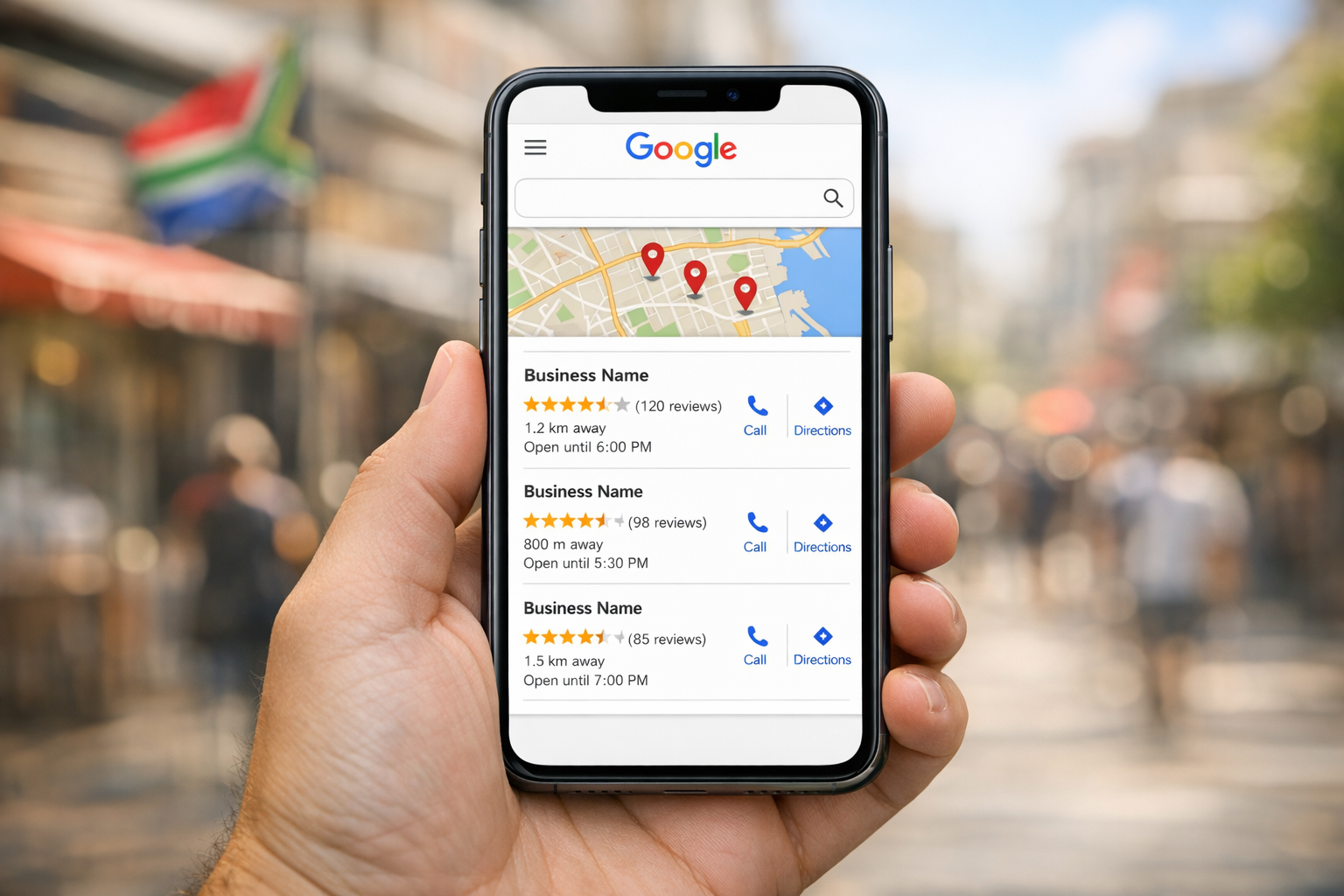
Multi-location businesses are where citations most often go wrong: inconsistent names, addresses and phone numbers across many listings. It rewards careful, unglamorous housekeeping.
Lesson 3: South African Niches are Hidden Goldmines
Estate agents and plumbers in second-tier cities often face less competition than in the big metros. Local knowledge helps identify these gaps.
Lesson 4: Trust = Business
People hire SEO on trust, and trust comes from transparency. Clients should own their accounts and data, and be able to see what is being done and why.
Why You Should Care
NexusSEO was founded in 2026 and is founder-led, so the person doing your SEO brings 18+ years of South African search experience. That experience, not the age of the company, is what you are hiring.