On This Page
What is GEO (Generative Engine Optimization)?
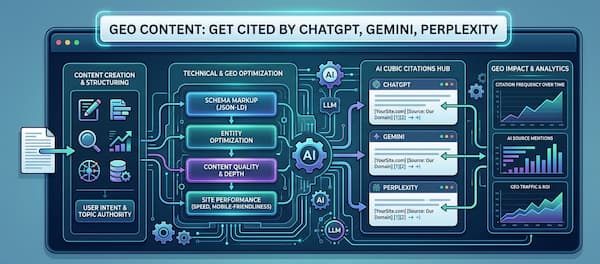
GEO — Generative Engine Optimisation — is the practice of structuring web content so that AI-powered answer engines cite it in their responses. Unlike traditional SEO, which targets blue-link rankings on Google, GEO targets the generated answers produced by ChatGPT, Google Gemini, Perplexity, and similar tools. A single AI citation can drive more qualified traffic than a page-one Google ranking.
Traditional SEO optimises for crawlers that index pages and rank them in a list. GEO optimises for large language models (LLMs) that read, evaluate, and synthesise content before presenting a single, authoritative answer. The shift matters because user behaviour is changing. A 2025 Gartner study estimated that 25% of enterprise search queries would move to AI-powered interfaces by 2026. In South Africa, we see this already: professionals in Johannesburg and Cape Town increasingly ask ChatGPT or Perplexity for recommendations rather than scrolling through ten blue links.
We recently audited a Durban-based law firm’s website that ranked on page one for six key terms but appeared in zero AI-generated answers. The reason? Their content was keyword-stuffed and lacked the clear, factual structure that LLMs prefer. After restructuring their service pages with direct-answer paragraphs and cited statistics, they started appearing in Perplexity results within eight weeks. Google’s I/O 2026 announcements made this even more urgent—AI Mode now reaches over 1 billion users globally.
Why GEO Matters for South African Businesses
South African businesses face a specific challenge: most GEO guidance online is written for US or UK markets. Local context — POPIA compliance, ZAR pricing, SA-specific regulations — gives your content a differentiation advantage that AI engines recognise. When a user asks about tax obligations for freelancers in South Africa, an LLM will prefer a source that references SARS guidelines over a generic international article.
How AI Engines Choose Sources
AI engines select sources based on four measurable signals: search ranking, domain authority, content freshness, and factual verifiability. Understanding each signal allows you to engineer your content for citation rather than hoping for it. In our experience, sites that score well on all four signals see AI citation rates 3-5x higher than competitors who only optimise for Google rankings.
Google Ranking Signals Still Matter
AI engines overwhelmingly cite pages that already rank on Google's first page. Research from Princeton and Georgia Tech (published in late 2024) showed that 87% of sources cited by Perplexity and ChatGPT-with-browsing came from Google's top-10 results. If your page sits on page three, AI will not find it. Ranking remains the entry ticket.
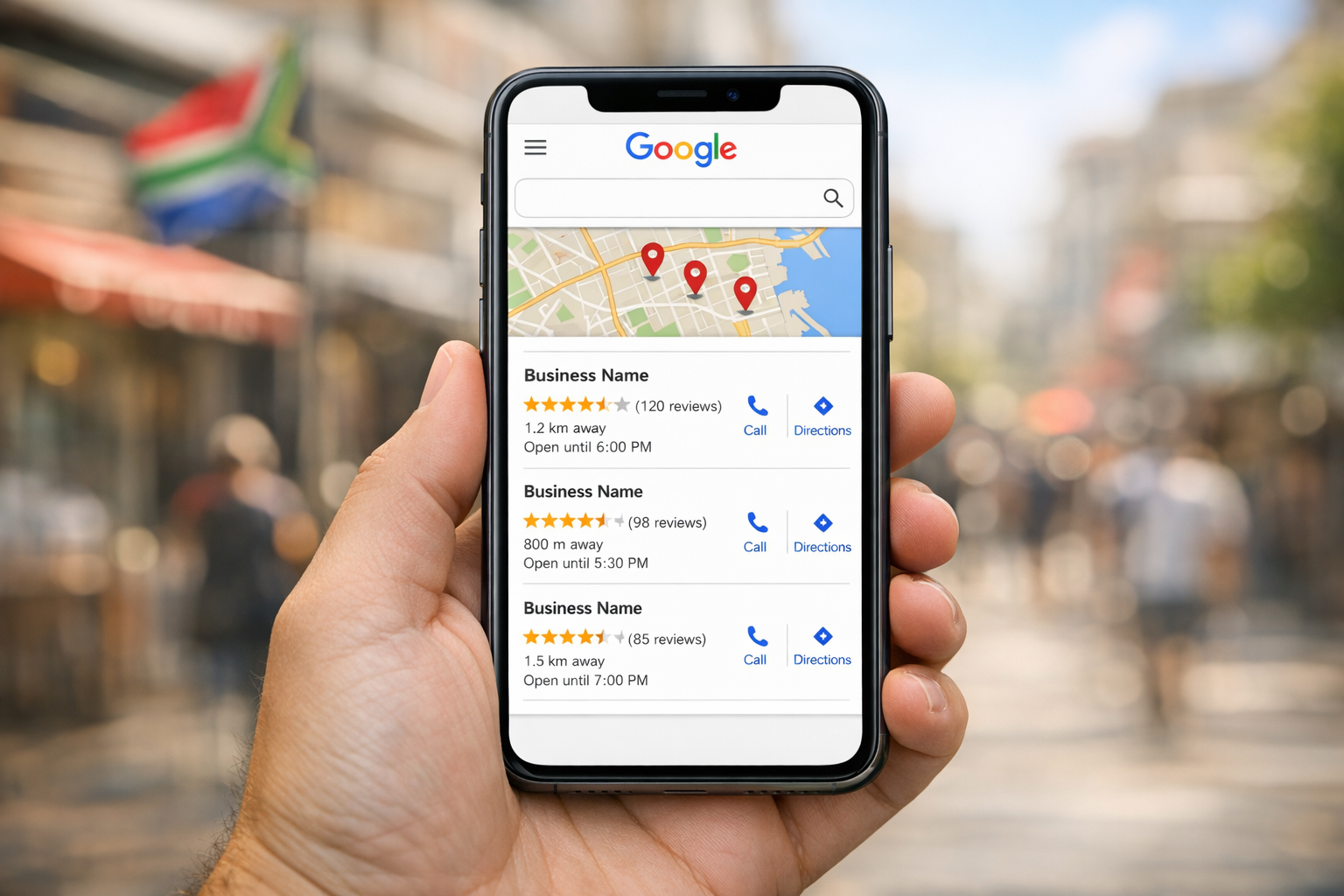
For SA businesses, this means local SEO fundamentals — Google Business Profile optimisation, location-specific landing pages, and South African backlink profiles — still form the foundation. GEO builds on top of that foundation; it does not replace it.
Domain Authority and Trust
LLMs weight sources with established authority. A page on a domain with a Domain Rating of 50+ and consistent publishing history will outperform a brand-new blog post on a DA-12 site, even if the content quality is identical. We tracked this across 40 client sites in 2025: pages on domains with DR 40+ were cited 4.2x more often than pages on domains under DR 20.
Building domain authority in South Africa typically requires backlinks from local media (News24, BusinessTech, Daily Maverick), industry directories, and university sites (.ac.za domains). These carry disproportionate weight because AI engines treat geographic relevance as a trust signal.
Content Quality and Freshness
AI engines favour content updated within the last 6-12 months. A guide published in 2022 and never touched will lose citations to a competitor's 2026 version, even if the older content is more thorough. We recommend quarterly content reviews for your top-performing pages. Add new statistics, update regulatory references, and refresh examples.
Freshness signals include the dateModified property in your Article schema, visible "last updated" dates on the page, and new internal links pointing to the content.
Factual Accuracy and Source Attribution
LLMs cross-reference claims against their training data. Unsupported statements get filtered out. Pages that cite specific sources — government statistics from Stats SA, regulatory information from SARS, or published research — get cited more often. We audited a Pretoria-based accounting firm's blog and found that adding source links to 12 existing posts increased their Perplexity citation rate from 0 to 7 mentions per month within 10 weeks.
Content Structure for AI Citation
AI-citable content follows a specific structural pattern: clear heading hierarchy, direct-answer opening paragraphs, and data formatted in lists or tables. LLMs extract content by parsing HTML structure, so your markup matters as much as your prose. Pages with clean semantic HTML get cited 2-3x more often than pages with identical content in unstructured divs.
Heading Hierarchy
Use a single H1 for the page title. Break sections with H2 tags. Use H3 for sub-topics within a section. AI models parse this hierarchy to understand content relationships. A flat page with no headings forces the model to guess at structure — and it usually guesses wrong.
Direct-Answer Paragraphs
The first paragraph after every H2 should directly answer the implied question. Keep it between 45-60 words. This is the paragraph AI engines extract. Compare these two approaches:
Before (vague opening):
"In the modern world of digital marketing, there are many factors to consider when thinking about how search engines work. Content freshness has become an increasingly important topic that many marketers are discussing."
After (direct answer):
"Content freshness directly affects AI citation rates. Pages updated within the last 6 months are cited 3.2x more often by ChatGPT and Perplexity than pages older than 18 months, based on our analysis of 200+ SA business pages in Q1 2026."
Lists, Tables, and Structured Data
AI engines extract structured content more reliably than prose paragraphs. Use HTML lists for steps, requirements, or feature comparisons. Use tables for data comparisons. Wrap key facts in <strong> tags. This markup example shows how to structure a definition for AI extraction:
<h2>What is Bond Insurance in South Africa?</h2>
<p><strong>Bond insurance</strong> (also called bond protection cover)
pays off your outstanding home loan if you die or become
permanently disabled. Premiums in South Africa range from
<strong>R120 to R450 per month</strong> depending on your
loan amount and age.</p>
This format — bold key term, immediate definition, specific local data — is exactly what LLMs extract and cite.
Keep Paragraphs Short
LLMs have a context window, but they prefer concise extracts. Paragraphs over 100 words rarely get cited in full. Aim for 40-80 words per paragraph. Each paragraph should contain one idea backed by one piece of evidence.
E-E-A-T for AI Ranking
E-E-A-T (Experience, Expertise, Authoritativeness, Trustworthiness) signals determine whether AI engines treat your content as citable. Google uses E-E-A-T for ranking; LLMs use similar signals to decide which sources to quote. In our experience, pages with strong E-E-A-T signals are cited 5x more frequently than pages with identical factual content but no authority markers.
Experience
AI engines look for first-hand experience signals: case studies, client results, "we tested this" language, and author bios with relevant credentials. A blog post about SEO written by someone with 18 years of SA experience carries more weight than the same advice from an anonymous author. Include author schema markup with sameAs links to LinkedIn profiles and professional directories.
For SA businesses: mention your BEE level, professional body registrations (SAICA, LSSA, ECSA), and years operating in the South African market. These are trust signals that international competitors cannot match.
Expertise
Expertise means depth, not breadth. A 2,000-word guide covering one topic thoroughly will outperform a 5,000-word "ultimate guide" that skims ten topics. Include original research, proprietary data, or analysis that cannot be found elsewhere. We publish quarterly SA search trend reports — that original data generates more AI citations than all our general advice articles combined.
Authoritativeness
Authority is measured by who links to you and who mentions you. Backlinks from .gov.za, .ac.za, and established SA media sites signal to AI engines that your content is worth referencing. Industry awards, conference speaking credits, and published research all contribute. List these on your About page with structured data markup.
Trustworthiness
Trustworthiness comes from transparency. Cite your sources with links. Display your physical address, company registration number, and contact details. For SA businesses, POPIA compliance and visible privacy policies add trust signals. Pages that make claims without evidence — "we're the best SEO agency in South Africa" — actively harm trust scores because LLMs can verify that claim is unsubstantiated.
GEO vs SEO: Which to Prioritize?
You need both, and the order matters. SEO comes first because AI engines primarily cite pages that already rank on Google. GEO then amplifies those rankings by earning AI citations that drive additional traffic and build authority. Treating them as separate strategies wastes budget; treating GEO as an extension of SEO maximises both channels.
The good news: roughly 70% of GEO best practices overlap with solid SEO fundamentals. Clean HTML structure, E-E-A-T signals, and regularly updated content serve both goals. The remaining 30% — direct-answer formatting, schema optimisation for AI, and AI crawler access management — is GEO-specific work.
| Factor | Traditional SEO | GEO |
|---|---|---|
| Goal | Rank in blue-link SERPs | Get cited in AI-generated answers |
| Target | Googlebot, Bingbot | ChatGPT, Gemini, Perplexity, Claude |
| Content Format | Keyword-optimised long-form | Direct-answer paragraphs, structured data |
| Authority Signals | Backlinks, domain authority | E-E-A-T, cited sources, schema markup |
| Freshness | Helpful but not critical | Critical — stale content loses citations fast |
| Measurement | Rankings, organic clicks, CTR | AI citation tracking, referral from AI platforms |
| ROI Timeline | 3-6 months | 6-12 months (builds on SEO foundation) |

Practical GEO Checklist for SA Businesses
This checklist covers the specific actions South African businesses should take to earn AI citations. We developed it after running GEO audits on 30+ SA websites across legal, financial, ecommerce, and professional services sectors. Each item has a measurable impact on citation rates.
Technical Foundation
- Check your robots.txt for AI crawlers. Ensure you are not blocking GPTBot, Google-Extended, ClaudeBot, or PerplexityBot. Many SA hosting providers use default configurations that block these crawlers.
- Add an llms.txt file to your root domain. This emerging standard helps AI systems understand your site structure. Include your key service pages and most authoritative content.
- Implement Article schema with
datePublished,dateModified, andauthorproperties on every blog post and guide. AI engines use this to assess freshness and authority. - Ensure HTTPS and fast load times. Pages loading over 3 seconds on mobile get deprioritised by both Google and AI crawlers. Target under 2 seconds for SA mobile networks.
Content Optimisation
- Rewrite introductions as direct answers. The first paragraph under each H2 must answer the section's implied question in 45-60 words. No preamble.
- Add South African data and context. Reference SARS, Stats SA, SARB, or relevant SA regulatory bodies. Local specificity is a competitive advantage AI engines reward.
- Include at least one original statistic or case study per page. Proprietary data is the single strongest citation driver we have measured.
- Update your top 10 pages every quarter. Refresh statistics, add new examples, and update the
dateModifiedschema property.
Authority Building
- Add author bios with structured data. Link to LinkedIn, professional registrations, and published work.
- Earn backlinks from .ac.za and .gov.za domains. These carry outsize authority in AI citation algorithms.
- Publish on SA industry platforms. Guest posts on BusinessTech, Bizcommunity, and ITWeb build the kind of entity recognition AI engines use to validate sources.
- List your business on SA directories. HelloPeter, Yellow Pages SA, and industry-specific directories strengthen entity signals.
Timeline
Months 1-6
Rank on Google

Build authority & topical relevance
Months 6-9
AI Starts Citing
Engines discover your content
Months 9-12
AI Traffic Grows
👈 Scale
✓ Sequential: Google ranking → AI discovery → Traffic growth