On This Page
Why Technical SEO Matters for South African Websites
Technical SEO is the foundation beneath every successful digital strategy. If Google cannot crawl, index, and fast-load your site, content and links won't matter.
In South Africa's unique environment—where load shedding disrupts connectivity and users expect instant results—technical SEO becomes your competitive advantage. A site loading in 2 seconds converts 40% better than one taking 5 seconds.
Core Web Vitals: Google's Three Critical Metrics
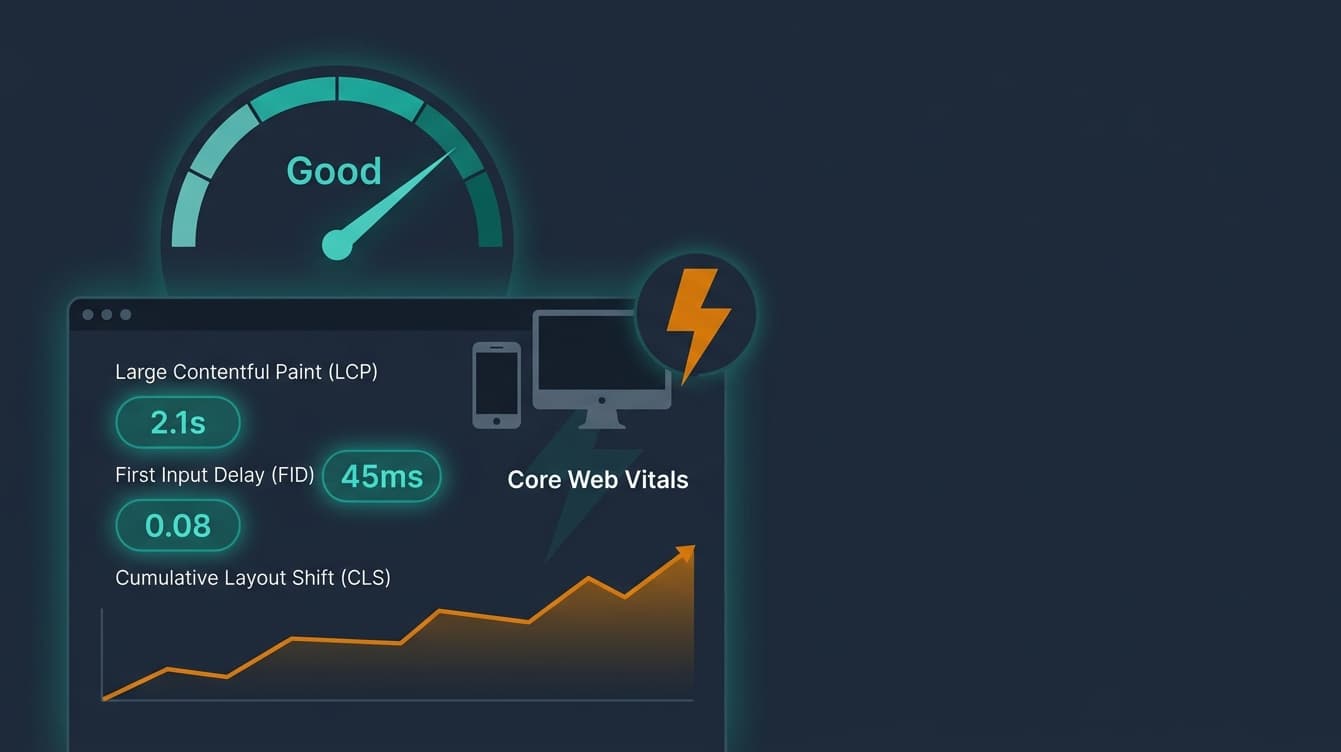
Google's Core Web Vitals measure three user experience signals that now directly impact rankings. For deep-dive optimization strategies specific to each metric, see our comprehensive Core Web Vitals optimization guide.
Core Web Vitals: Target Thresholds
Largest Contentful Paint (LCP)
Measures how long your main content takes to appear. Target: under 2.5 seconds. With load shedding and inconsistent bandwidth, users abandon slow sites.
First Input Delay (FID)
Measures delay between user input and browser response. Target: under 100ms. Heavy JavaScript and third-party scripts are common culprits.
Cumulative Layout Shift (CLS)
Measures unexpected layout shifts. Target: under 0.1 (ideally under 0.05).
Mobile-First Indexing & Speed Optimization
Google now crawls and indexes primarily using the mobile version. If your mobile site is slow, your desktop rankings suffer. 75% of South African users access via mobile. For comprehensive page speed optimization techniques, see our detailed page speed optimization guide.
South Africa's Unique Challenge: Load Shedding
Load shedding creates unpredictable user experiences. Your site must load partial content and remain responsive during connectivity drops. Implement service workers, prioritise critical content, and test on throttled 2G connections. See our dedicated guide on page speed and load shedding impact for SA-specific optimization strategies.
Crawl Budget & Site Architecture
Google allocates a crawl budget to each site. Wasting this budget on redirects, duplicates, or broken links means important pages don't get indexed. Fix redirect chains, remove duplicates, and use canonical tags.
Schema & Structured Data Implementation
Schema markup helps Google understand your content. It can trigger rich snippets in search results that increase click-through rates by 30%+. Implement BlogPosting, LocalBusiness, FAQPage, and BreadcrumbList schemas.
HTTPS, Security & Core Web Security
HTTPS is no longer optional—it's a ranking factor. Your site must use SSL/TLS certificates to rank competitively. Avoid mixed content, insecure forms, malware, and outdated certificates.
Frequently Asked Questions
What's the difference between on-page and technical SEO?
On-page SEO: content optimization (keywords, headings, meta tags, internal links). Technical SEO: infrastructure (speed, mobile responsiveness, crawlability, schema). Both are essential.
How do I check my Core Web Vitals?
Use PageSpeed Insights (pagespeed.web.dev) for real Core Web Vitals data. Google Search Console also shows status. Check mobile and desktop separately—they often differ.
Does load shedding directly hurt SEO?
Yes, indirectly. Slow sites during load shedding increase bounce rates, and Google's crawlers may timeout. Optimize for resilience under connectivity constraints.
What's the most important technical SEO factor?
Site speed (Core Web Vitals) is arguably most critical. It's a confirmed ranking factor and directly affects user experience and conversions.
Ready to Fix Your Technical Foundation?
A technical SEO audit reveals hidden issues costing you rankings. Get your free analysis within 24 hours.
Get Your Free Technical SEO Audit →